11-14
Keep our environment clean
submitted by De La Salle senior school : Matthew Caruana for 11-14
dissemination(s): school magazine, school media
filed under Photos
I took this photo as I would like to show the few high hills found in Malta. Although this scenery is scarce in Malta, we still do not take care of our environment. I tried to show the beautiful scenes on Malta, and on the bottom left of the picture one can find scraped cars which ruin the environment. With this picture, I would like to start an awareness of keeping our environment clean and beautiful, as in 2018 Valletta is going to be the European Capital. If we could all do our bit, and throw away litter where it should be thrown away, we would clear the Maltese environment instantly and make our island a better looking one.

Water Water everywhere and not a Drop to Drink
submitted by Gozo College Boys Secondary : EkoSkola Committee for 11-14
dissemination(s): school media
filed under Photos
Water is a valuable resource, especially in our country where we don’t have many options where to get fresh water from. While we acknowledge that a lot has been done to clean our valleys and facilitate the water flow, there is still a lot to be done to maintain them regularly. This valley in Gozo has been left to fill up with debris with the consequence that if it rains nearby properties will get flooded. This has already happened in the past. Moreover, if measures were taken for this water to be used, farmers would find good use for it.

Once upon a time
submitted by Gozo College Boys Secondary : EkoSkola Committee for 11-14
dissemination(s): school media
filed under Photos
Once upon a time there was a place which looked a lot like heaven. But even in heaven one can find persons who are more concerned with doing what they please, than with enjoying and letting others enjoy the place. Fortunately, they are only few and we hope that even these wake up to the fact that we live in a beautiful place and that it’s up to each and every one of us to keep it this way. After all there is really no doubt which view of heaven is the most pleasing, is there?

Rain Rain Go Away
submitted by Gozo College Boys Secondary : EkoSkola Committee for 11-14
dissemination(s): school media
filed under Photos
Water culverts are one of the ways in which rain water can be properly directed towards natural or man-made reservoirs. However, keeping them clear of all debris all year round is essential for them to be effective. Regular clean-ups are a necessity, as even after a small drizzle, they can become clogged up with leaves and other rubbish. This could cause various problems including drainage, flooding, soil erosion and water table problems.

Local water pump mills crying for repair
submitted by St. Margaret's College Boys' Secondary School Verdala : Tristan Busuttil for 11-14
dissemination(s): school media
filed under Photos
On the way from Dingli to Rabat, lots of broken Wind pump mills emerge. This particular wind pump situated in a private field has been seriously damaged by a strong wind which hit the area last winter. These mills are used by farmers to pump water from deep under-ground to irrigate their fields. Some of these wind pumps are still in use although, sadly, many of them have been neglected and have fallen into a state of disrepair. I love watching the giant blades turning in the wind with a sense of awe and I hope that Malta will find enough funds to restore these wind pumps as they are a source of renewable energy and environment friendly. Malta is one of a few European states encountering difficulties to reach its set energy targets, and to achieve its goals it needs to take additional measures, like repairing such Wind pumps.

Oil Spill Threatening St George’s Bay
submitted by St. Margaret's College Boys' Secondary School Verdala : Luca Agius for 11-14
dissemination(s): school media
filed under Photos
On Wednesday morning 24th October a large slick of oil was floating in St George’s Bay, Birzebbuga. The slick, orange in colour, split into a number of separate parts later in the day. Speculations on whether the slick could have come from a large ship in the bay or from a bunkering operation remained until samples to identify the source of the slick were tested. Birzebbuga mayor Joseph Farrugia was immediately contacted and the Transport Malta and the Civil Protection Unit were on site. The Maritime Authority lifted samples from the sea and a private company was equipped to clean the water. Spilled oil harms the sea environment in several ways, including the physical damages that directly impact wildlife and their habitats and the toxicity of the oil itself, which can poison exposed organisms. Luckily Transport Malta took the necessary steps to clean up the bay engaging a specialized contractor.

Fill our road potholes
submitted by St. Margaret's College Boys' Secondary School Verdala : Kurt Cordina for 11-14
dissemination(s): school media
filed under Photos
After a heavy down pour, lots of potholes appear on our local roads. A deep pothole appeared just in the road beneath our school risking a serious accident in the area. Drivers who do not avoid the damaged road often send loose rocks flying into other drives and neighbours have been asking for the surface to be repaired as soon as possible. After contacting the Cospicua Local Council I was informed that though they know about it, their office carries no responsibility in this regard. Such road repair falls directly under the Malta Transport Authority (MTA) and the Cospicua Local Council already informed the MTA about this large pothole. In return the MTA informed the Cospicua Local Council that such a pothole was in due soon repair. However, resurfacing the road will not solve the problem as water drain culverts are also needed in the area.

It’s going to be a bumpy ride!!
submitted by Gozo College Boys Secondary : EkoSkola Committee for 11-14
dissemination(s): school media
filed under Photos
This truck all filled up with all sorts of rubbish. A recycle freak? A spring cleaning macho? Or a dumper? We wondered where all this was going to end up at the end of the day. We hope that it won’t end up like the pile of rubbish in the second photo.
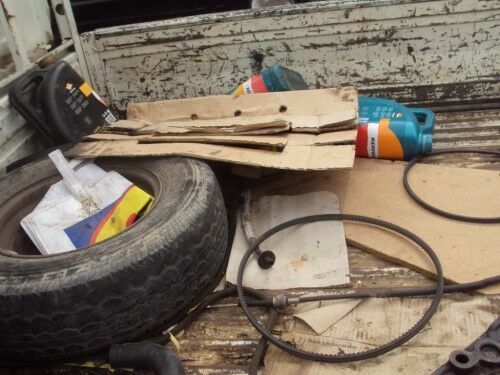
Fig Tree vs. Rubble Wall
submitted by Our Lady Immaculate School Hamrun : Martina Agius, Michaela Agius for 11-14
dissemination(s): EkoSkola Notice board, other, website
filed under Photos
This rubble wall is found in the centre of Lija. Damage is being done to this fig tree due to the poor conditions of the rubble wall. However, the question is, can we protect this fig tree without causing more damage? It can be the storms or even vandalism that are causing the fig tree to surrender, being crushed beneath the stones of the rubble wall. Organisms are suffering as well, having no shelter to live in. Action should be taken immediately.

Nature or De-Nature?
submitted by Our Lady Immaculate School Hamrun : Martina Agius, Michaela Agius for 11-14
dissemination(s): EkoSkola Notice board, other, website
filed under Photos
A lot of us know that trees give us a lot of benefits in our lives. Trees take in carbon dioxide and exchange it to oxygen. However, few of us notice that some trees, like the one shown in the photograph are fighting for survival. Main reasons are taking trees for granted and waste is littering. As shown in the photograph, the litter is not the common litter like paper and plastic bottles (which are very BAD for the environment), but even construction waste like stones and wood. We all can do something to help. The easiest way to help the environment be a better place is by applying the 3 Rs in our daily life – REDUCE, REUSE, RECYCLE.

All the Articles
- 7-10
- 11-14
- 15-18
- 19-25
- Best Entry
- Participation
- 1st place Litter less Campaign
- 2nd place Litter less Campaign
- 3rd place Litter less campaign
- Honorable Mention
- YREstayshome
- 1st place international
- International Honorable Mention
- 2nd place international
- 3rd place international
- Shortlisted internationally
- Best Entry International Collaboration
- Best YREstayshome Award
- Sustainable Mobility Award
- Most active YREstayshome participant
- YREstayshome International Award
- New Category
- Disqualified
- Resisles
- Resisles Best Entry
- Resisles 2nd Place
- Resisles Commended
- Resisles 3rd Place
- Resisles Honorable Mention
- Commended
- Finalist
- HSBC Award
- NT-FEE Award
- WasteServ Award
- WER Award
All the Photos
- 7-10
- 11-14
- 15-18
- 19-25
- Best Entry
- Participation
- 1st place Litter less Campaign
- 2nd place Litter less Campaign
- 3rd place Litter less campaign
- Honorable Mention
- YREstayshome
- 1st place international
- International Honorable Mention
- 2nd place international
- 3rd place international
- Shortlisted internationally
- Best Entry International Collaboration
- Best YREstayshome Award
- Sustainable Mobility Award
- Most active YREstayshome participant
- YREstayshome International Award
- New Category
- Disqualified
- Resisles
- Resisles Best Entry
- Resisles 2nd Place
- Resisles Commended
- Resisles 3rd Place
- Resisles Honorable Mention
- Commended
- Finalist
- HSBC Award
- NT-FEE Award
- WasteServ Award
- WER Award
All the Video Clips
- 7-10
- 11-14
- 15-18
- 19-25
- Best Entry
- Participation
- 1st place Litter less Campaign
- 2nd place Litter less Campaign
- 3rd place Litter less campaign
- Honorable Mention
- YREstayshome
- 1st place international
- International Honorable Mention
- 2nd place international
- 3rd place international
- Shortlisted internationally
- Best Entry International Collaboration
- Best YREstayshome Award
- Sustainable Mobility Award
- Most active YREstayshome participant
- YREstayshome International Award
- New Category
- Disqualified
- Resisles
- Resisles Best Entry
- Resisles 2nd Place
- Resisles Commended
- Resisles 3rd Place
- Resisles Honorable Mention
- Commended
- Finalist
- HSBC Award
- NT-FEE Award
- WasteServ Award
- WER Award
All the Podcasts
- 7-10
- 11-14
- 15-18
- 19-25
- Best Entry
- Participation
- 1st place Litter less Campaign
- 2nd place Litter less Campaign
- 3rd place Litter less campaign
- Honorable Mention
- YREstayshome
- 1st place international
- International Honorable Mention
- 2nd place international
- 3rd place international
- Shortlisted internationally
- Best Entry International Collaboration
- Best YREstayshome Award
- Sustainable Mobility Award
- Most active YREstayshome participant
- YREstayshome International Award
- New Category
- Disqualified
- Resisles
- Resisles Best Entry
- Resisles 2nd Place
- Resisles Commended
- Resisles 3rd Place
- Resisles Honorable Mention
- Commended
- Finalist
- HSBC Award
- NT-FEE Award
- WasteServ Award
- WER Award


